
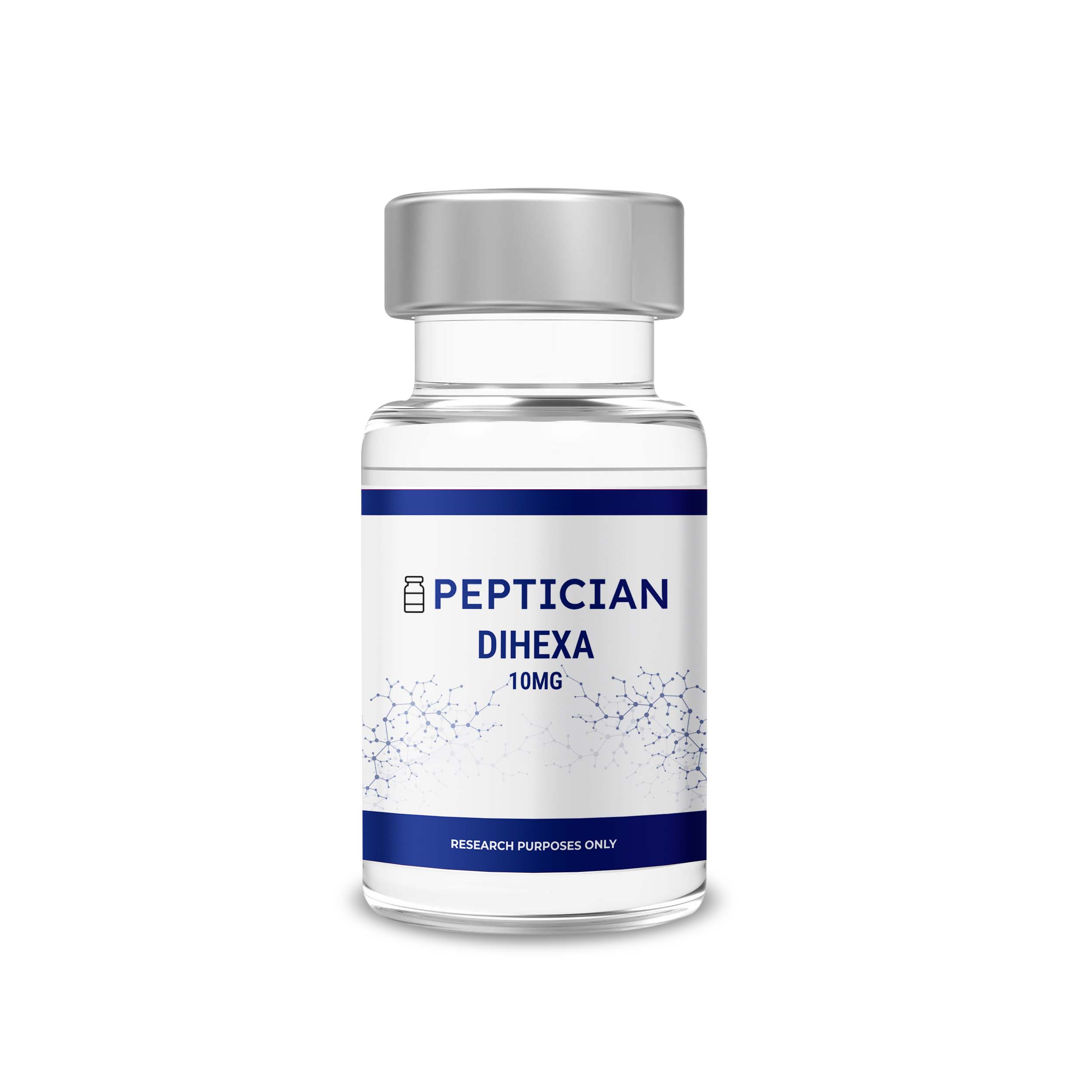
Dihexa (N-hexanoic-Tyr-Ile-(6) aminohexanoic amide) is a synthetic peptide analogue derived from angiotensin IV, developed to investigate its profound effects on cognitive function and neurological repair. Originally researched at Washington State University, Dihexa has attracted significant scientific interest due to its exceptionally high potency in facilitating synaptogenesis — the formation of new synaptic connections — which is considered fundamental to learning and memory consolidation.
Dihexa functions primarily by potentiating hepatocyte growth factor (HGF) signalling through the MET receptor tyrosine kinase pathway. This mechanism promotes neuronal survival, dendritic branching, and synaptic density, making it a valuable research compound in models of neurodegeneration, cognitive decline, and traumatic brain injury.
In preclinical studies, Dihexa has demonstrated activity several orders of magnitude greater than BDNF in facilitating hippocampal synaptogenesis, positioning it as a compelling subject for research into Alzheimer’s disease, Parkinson’s disease, and age-related cognitive impairment.
Specifications: Molecular Formula C₃₂H₅₃N₅O₅, Molecular Weight 591.79 g/mol, Purity >98% by HPLC, CAS 1401708-83-5. Supplied as lyophilised powder. Store at -20°C, protected from light and moisture. Reconstitute in sterile bacteriostatic water or DMSO prior to use.
Molecular Formula
C₃₂H₅₃N₅O₅
Molecular Weight
591.79 g/mol
Purity
>98%
CAS Number
1401708-83-5
Form
Lyophilised Powder
Research Applications
Cognitive enhancement research, Neurodegeneration models, Synaptic plasticity studies, Alzheimer’s disease research, Traumatic brain injury models, HGF/MET signalling pathway research
For research purposes only. Not for human use.


Reviews
There are no reviews yet.